
What's the Difference?
Spinal Decompression vs Traction.
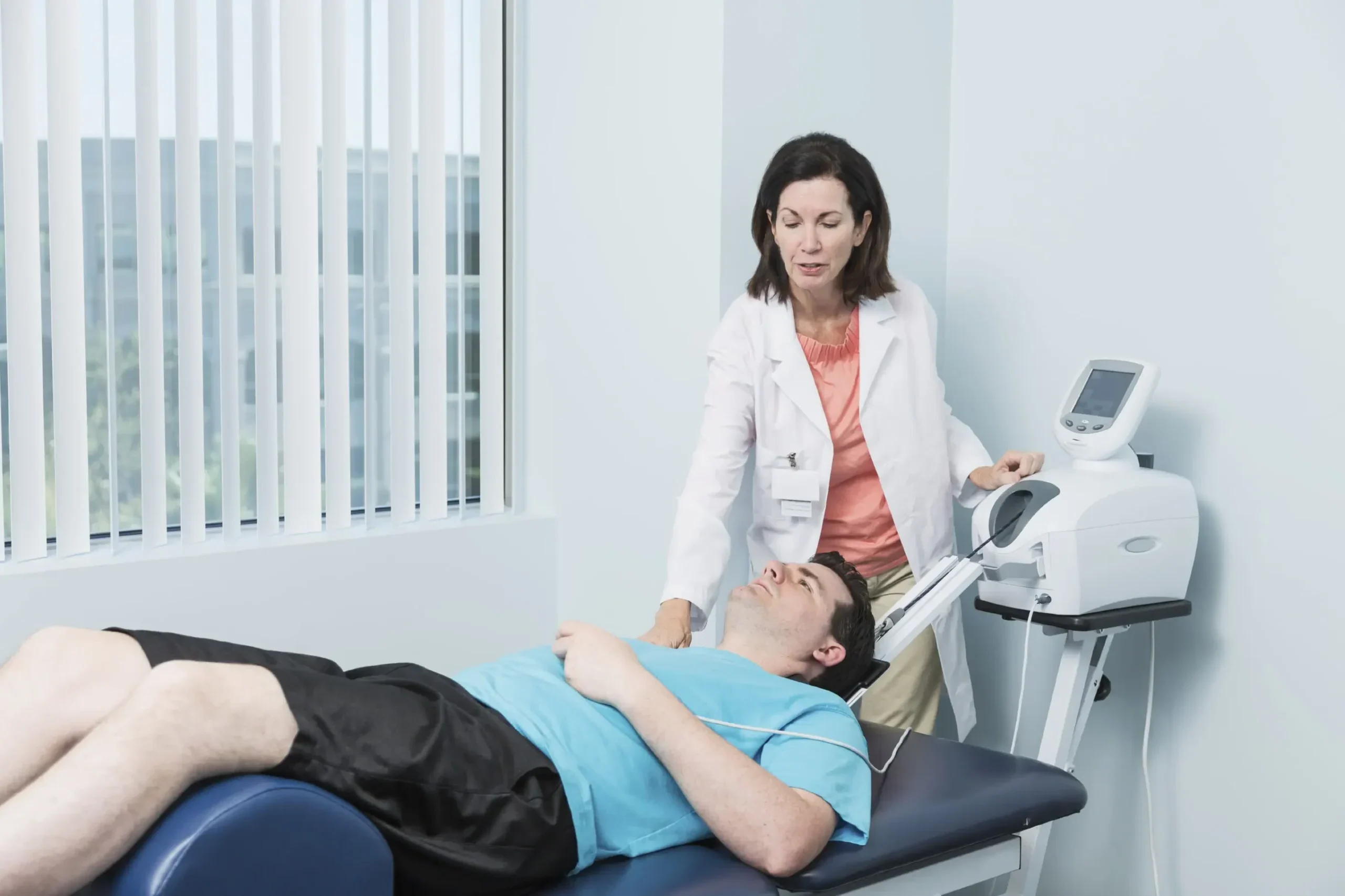
People often confuse spinal decompression with traction because both involve stretching the spine. But they work differently, use different equipment, and produce different results. If you're considering treatment for a herniated disc, bulging disc, or chronic back pain, understanding the difference matters. Novaré Injury Care and Rehab in Fort Myers uses computerized spinal decompression (DRX9000 and AccuSPINA), not basic traction.
Why Does This Matter for Your Treatment?
If your back pain is caused by a herniated disc, bulging disc, or degenerative disc disease, basic traction may provide temporary relief but is unlikely to change the disc problem itself. Computerized decompression targets the disc directly and promotes actual healing.
At Novaré, we require MRI imaging before starting decompression. Dr. Ivan Bracic reads every scan to confirm which disc level needs treatment and whether decompression is appropriate for your condition.
How Do Traction and Decompression Differ?
Traction: Applies a uniform, steady pulling force to the spine. Can be done manually (by a therapist), mechanically (motorized table), or with an inversion table (gravity). Your body's muscles often resist the pull, reducing effectiveness. Benefits tend to be temporary.
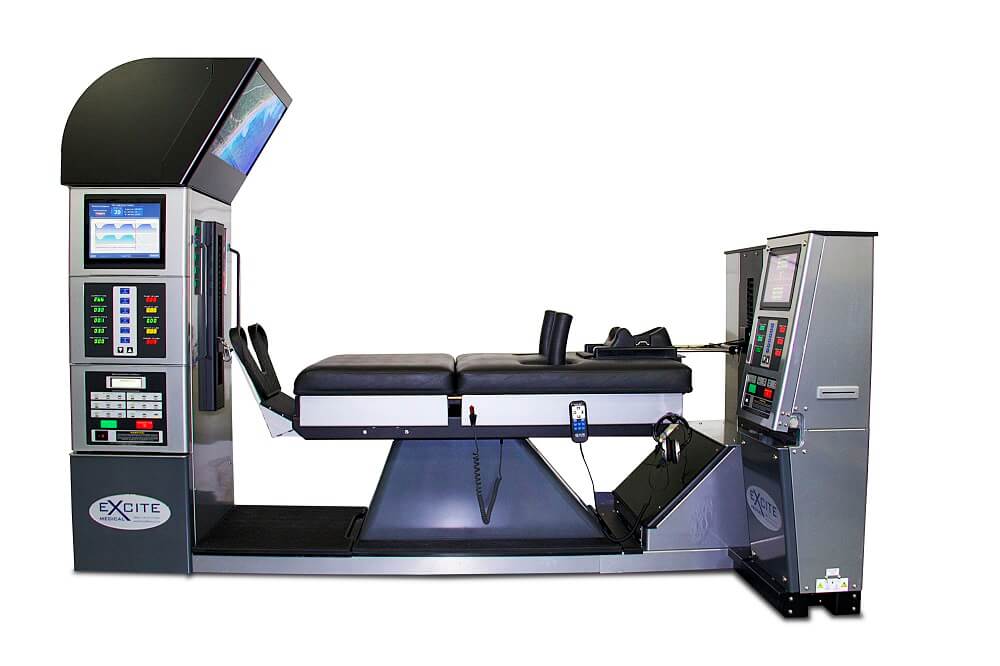
Computerized decompression: Uses computer-controlled systems that cycle between stretching and relaxation phases. The machine adjusts in real time based on your body's response, bypassing the muscle guarding reflex that limits traction. Creates negative intradiscal pressure for a vacuum effect.
Basic Traction
Uniform, steady pull. Can't target specific disc levels. Body resists with muscle guarding. Temporary relief only. Equipment costs $500 to $5,000.
Computerized Decompression
Variable, computer-controlled cycling. Targets specific disc levels. Bypasses muscle guarding. Creates negative intradiscal pressure for actual disc healing.
DRX9000
Targets specific spinal levels in both lumbar and cervical regions. $80,000+ clinical-grade equipment at Novaré.
AccuSPINA
Patented oscillation waveforms mobilize the spine with even greater precision. 92% success rate in clinical data for herniated discs.
Side-by-Side Comparison
How basic traction and computerized decompression compare on the factors that matter most.
| Factor | Basic Traction | Computerized Decompression |
|---|---|---|
| Force control | Uniform, steady pull | Variable, computer-controlled cycling |
| Muscle guarding | Body resists the pull | Machine bypasses the guarding reflex |
| Disc targeting | General area | Specific disc level |
| Intradiscal pressure | Reduced but not negative | Creates negative pressure (vacuum effect) |
| Disc healing | Temporary relief | Promotes rehydration and structural healing |
| Equipment cost | $500 to $5,000 | $80,000+ (DRX9000) |
| Clinical evidence | Limited for disc herniation | AccuSPINA shows 92% success rate |
What Is Spinal Traction?
Traction applies a uniform, steady pulling force to the spine. It has been used for decades and can temporarily relieve pressure and reduce muscle spasms. But it has limitations.
- The pulling force is uniform and can't target specific disc levels
- Your body's muscles often resist the pull, reducing effectiveness
- Inversion tables rely on gravity alone with no precision control
- Benefits tend to be temporary because the treatment doesn't address the disc directly
What Is Computerized Spinal Decompression?
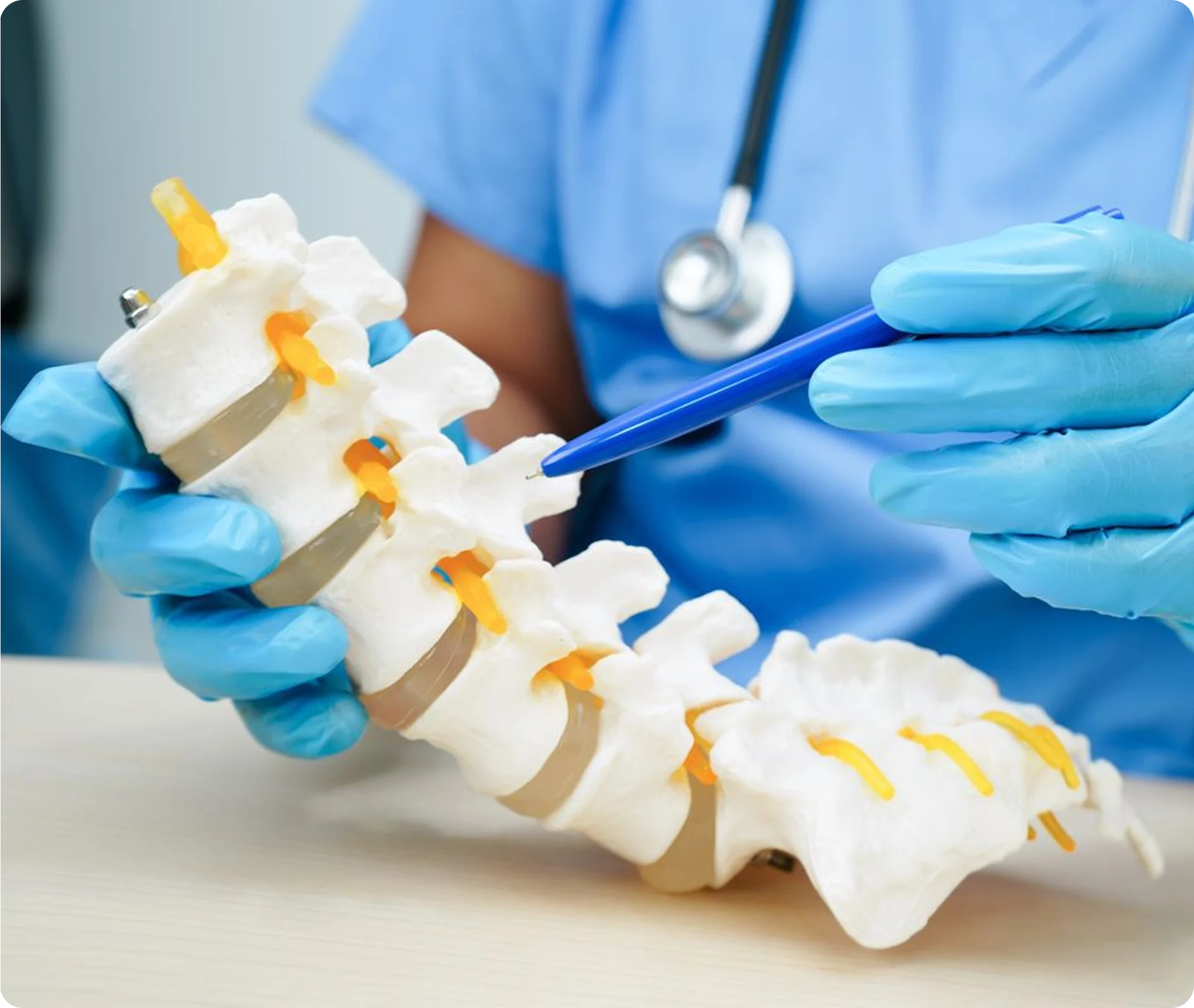
Spinal decompression uses computer-controlled systems that cycle between stretching and relaxation phases. The machine adjusts in real time based on your body's response, bypassing the muscle guarding reflex that limits traction.
- Retracts herniated or bulging disc material back toward the center
- Draws fluid and nutrients into the damaged disc
- Promotes disc rehydration and healing over time
- Creates negative intradiscal pressure (vacuum effect)
Your Best Self Is Calling
Not sure where to start? Use our virtual consultation tool to share your concerns and get recommendations from home.
Decompression vs Traction Questions Answered
Get clear answers about the difference between spinal decompression and traction.
Two Convenient Locations Serving Southwest Florida
Same-day appointments at both locations.
Service Area
Nuestro personal habla inglés y español.
Most Popular Treatments
Chiropractic Care
Spinal adjustments, Cox Flexion Distraction, Pro Adjuster SRT.
Spinal Decompression
Non-surgical disc treatment using the DRX9000 and AccuSpina. MRI required.
Accident Care
Auto accident, workplace, and sports injury treatment.
Laser Therapy
AI-guided Class IV lasers for tissue repair.
Diagnostic Imaging
Digital x-rays with MRI coordination.
Manual Therapy
Myofascial release, joint mobilization.